
Content Recap - Written Piece to Video
An editorial, deliberately quiet 34-second 9:16 recap of a single written piece - a blog post, newsletter issue, or press release turned into a Reel/Short. Seven scenes on an ink → photo → newsprint → ink rhythm: a title-page cover carrying the headline, one held hero image on a solid ink caption band, the four points that matter as full-page pull-quotes numbered 01-04 in cobalt, and a scannable close with a QR tile and the article URL. Newsreader serif for every word pulled from the piece, JetBrains Mono for all furniture, and a single cobalt accent used exactly four times in the whole video. Built for messy input: each text slot is a fixed box with a type ladder, so a six-word point and a twenty-five-word point both look set on purpose. Swap the seven per-post fields - headline, hero_image, point_1 through point_4, article_url and its qr_image - while publication_name is bound once per publisher, so an RSS item or CMS publish webhook renders a finished video per post and the same payload shape backfills an entire archive.
- Aspect ratio
- 9:16 · Vertical
- Duration
- ~34s
- Category
- Social Media
Try it with your own copy
Edit a field and the frame re-renders in your browser. No account, no credits - previews are free because they cost a browser paint, not a render.
What you can customize
This template exposes 9 dynamic fields you can swap per video - edit them in the editor or pass them to the API to batch-render variations at scale. The monospace name is the exact key to send in replacements.
Headline
textheadlineThe Complete Guide to Automating Video Creation in 2026
~100 characters max · 5 lines
Publication Name
textpublication_nameThe Renderly Blog
~55 characters max · 1 line
Hero Image
urlhero_imagehttps://images.unsplash.com/photo-1758874384555-37d50c0ee81a?fm=jpg&q=80&w=1080&h=1592&fit=crop&crop=entropy
Point 1
textpoint_1Agency video runs $1,000 a minute. A template render runs twenty cents.
~241 characters max · 12 lines
Point 2
textpoint_263% of video marketers used AI tools this year, up from 51% the year before.
~241 characters max · 12 lines
Point 3
textpoint_3Template assembly fits about 65% of business video jobs; hybrid pipelines take 25%, and only 10% genuinely need a model generating new pixels.
~494 characters max · 17 lines
Point 4
textpoint_4Budget 2.5 words per second. A 30- second video holds 75 words, not a paragraph.
~241 characters max · 12 lines
Qr Image
urlqr_imagehttps://api.qrserver.com/v1/create-qr-code/?size=600x600&margin=0&color=171613&bgcolor=F2EEE5&data=https%3A%2F%2Frenderly.video%2Fblog%2Fcomplete-guide-automating-video-creation-2026
Article Url
textarticle_urlrenderly.video/blog
~77 characters max · 2 lines
Render it from the API
Copy either call below. Both already carry this template's ID and its real variable keys - swap the values for your own.
1. Preview it — free
Same body as a render. Costs no credits, creates no job. Returns a public URL that plays the video in a browser, plus a list of problems with your payload — a mistyped key is otherwise ignored in silence.
curl -X POST https://renderly.video/api/v1/previews \
  -H "Authorization: Bearer $RENDERLY_API_KEY" \
  -H "Content-Type: application/json" \
  -d '{
  "templateId": "content-recap",
  "replacements": {
    "headline": "The Complete\nGuide to\nAutomating Video\nCreation in 2026",
    "publication_name": "The Renderly Blog",
    "hero_image": "https://images.unsplash.com/photo-1758874384555-37d50c0ee81a?fm=jpg&q=80&w=1080&h=1592&fit=crop&crop=entropy",
    "point_1": "Agency video runs\n$1,000 a minute. A\ntemplate render\nruns twenty cents.",
    "point_2": "63% of video\nmarketers used AI\ntools this year, up\nfrom 51% the year\nbefore.",
    "point_3": "Template assembly fits\nabout 65% of business\nvideo jobs; hybrid pipelines\ntake 25%, and only 10%\ngenuinely need a model\ngenerating new pixels."
  }
}'2. Render it
Change one word in the URL. Keep templateId — it is what links your call to this template, so later improvements reach you automatically.
curl -X POST https://renderly.video/api/v1/renders \
  -H "Authorization: Bearer $RENDERLY_API_KEY" \
  -H "Content-Type: application/json" \
  -d '{
  "templateId": "content-recap",
  "replacements": {
    "headline": "The Complete\nGuide to\nAutomating Video\nCreation in 2026",
    "publication_name": "The Renderly Blog",
    "hero_image": "https://images.unsplash.com/photo-1758874384555-37d50c0ee81a?fm=jpg&q=80&w=1080&h=1592&fit=crop&crop=entropy",
    "point_1": "Agency video runs\n$1,000 a minute. A\ntemplate render\nruns twenty cents.",
    "point_2": "63% of video\nmarketers used AI\ntools this year, up\nfrom 51% the year\nbefore.",
    "point_3": "Template assembly fits\nabout 65% of business\nvideo jobs; hybrid pipelines\ntake 25%, and only 10%\ngenuinely need a model\ngenerating new pixels."
  }
}'The body above shows 6 of 9 variables. Send any subset — every key you leave out renders its authored default. Read the full contract, with character limits, from GET /api/v1/templates/content-recap/variables. See the previewing guide, the rendering guide, or the OpenAPI spec.
Frequently asked questions
How do I customize the Content Recap - Written Piece to Video template?
Open the template in the Renderly editor and replace its 9 customizable fields (such as Headline) with your own text, images, or video. Every change previews instantly before you render.
How much does it cost to render this template?
Rendering is credit-based - 1 credit equals 1 minute of 1080p video. You only pay when you export, and credits never expire on the pay-as-you-go plan.
Can I generate this video at scale via the API?
Yes. POST this template's ID and a replacements object to /api/v1/renders - one call per row of data, 9 fields swappable per video. Send the same body to /api/v1/previews first to check it for free. No-code integrations like Zapier work the same way.
More Social Media templates
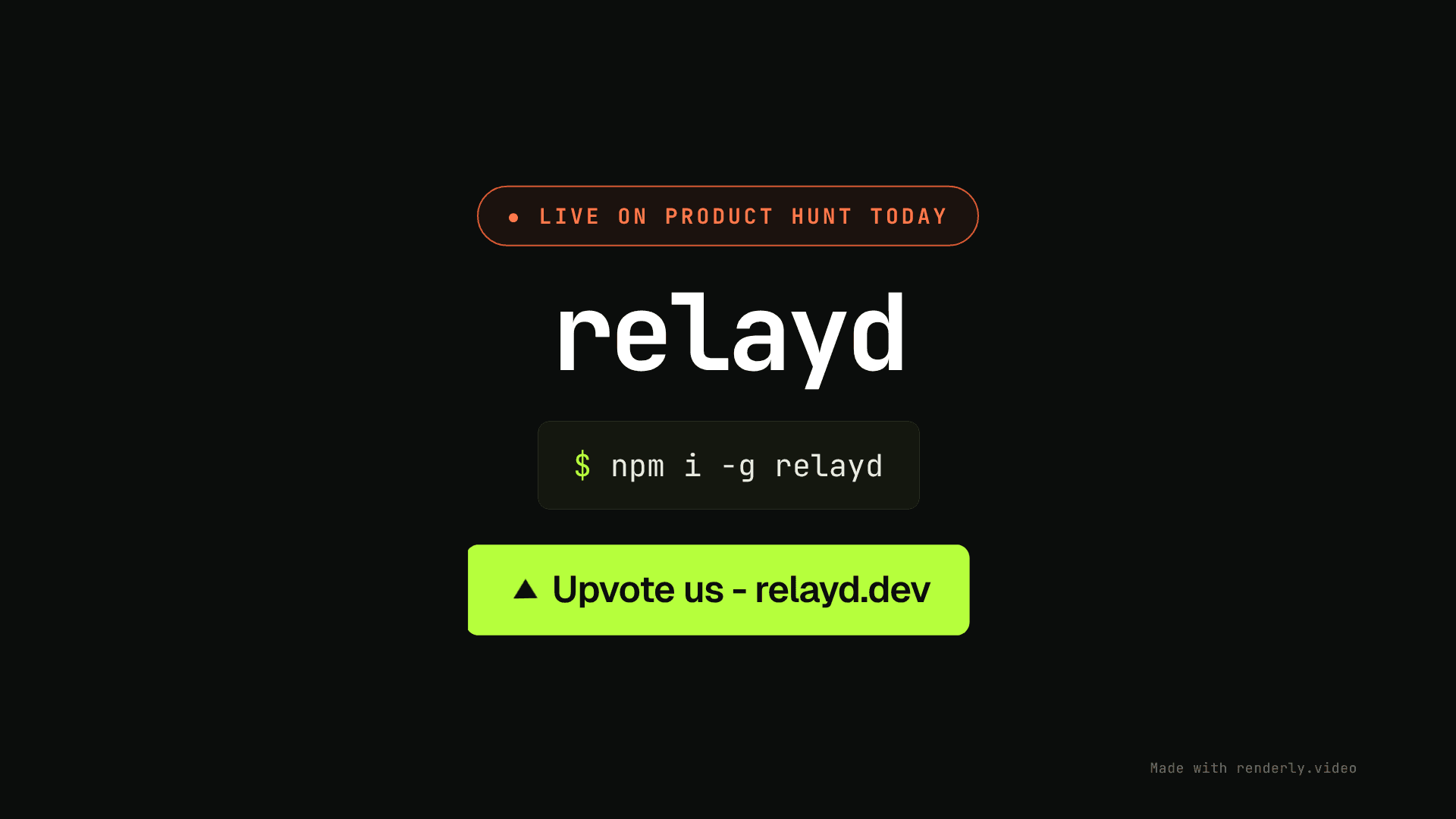
Product Hunt Launch - Dev Tool / CLI
A 27-second 16:9 launch video for products whose demo is a command, not a dashboard - CLIs, APIs, SDKs and developer tools, where a generic screenshot template flatters none of them. Terminal-dark throughout, monospace-led, with the install line as the hero object: it types on character by character behind a blinking caret, and the pill grows to fit whatever command you give it, so a long `npm install -g` never clips. Five scenes on an alternating near-black and paper ground, cut by hard-edge wipes rather than dissolves: the prompt opens with your mark, wordmark, tagline and install command; the command runs and prints its output one line at a time onto a terminal that tilts into the frame and settles flat; a config panel proves how little there is to adopt; a p99 latency card and a live log stream prove it is production-serious; and the close pairs the Product Hunt pill with the command again and an upvote CTA. Every panel is built from primitives rather than uploaded screenshots, so the defaults look finished before you change anything, and the depth is real - each window arrives at an angle and rotates flat over its entry, with a slow sway holding it alive afterwards. Eighteen dynamic fields cover the whole video and all of them are short single-line strings plus one logo image: product_name and install_cmd (each used twice, in the opening and the close), version_line, tagline, the three feature headlines, the five terminal lines (run_cmd, step_1, step_2, success_line, deploy_url), config_filename, metric_label and metric_value, launch_line and cta_line. launch_line is the Product Hunt switch and the only Product-Hunt-specific element in the template: empty it and the orange pill disappears, leaving a generic launch video that works on X, LinkedIn, a landing page or a mailer. A restrained sound design rides under the music - keystrokes under the two typewriters, a whoosh on each scene wipe, and a software tone on the "live in 11.4s" beat. Two notes for integrators: install_cmd renders at a fixed 38px and the pill shrink-wraps around it, so length is free but a very long command makes a wide pill; and the six config lines and six log rows are static sample chrome, since per-token syntax colour cannot survive a single-string replacement.
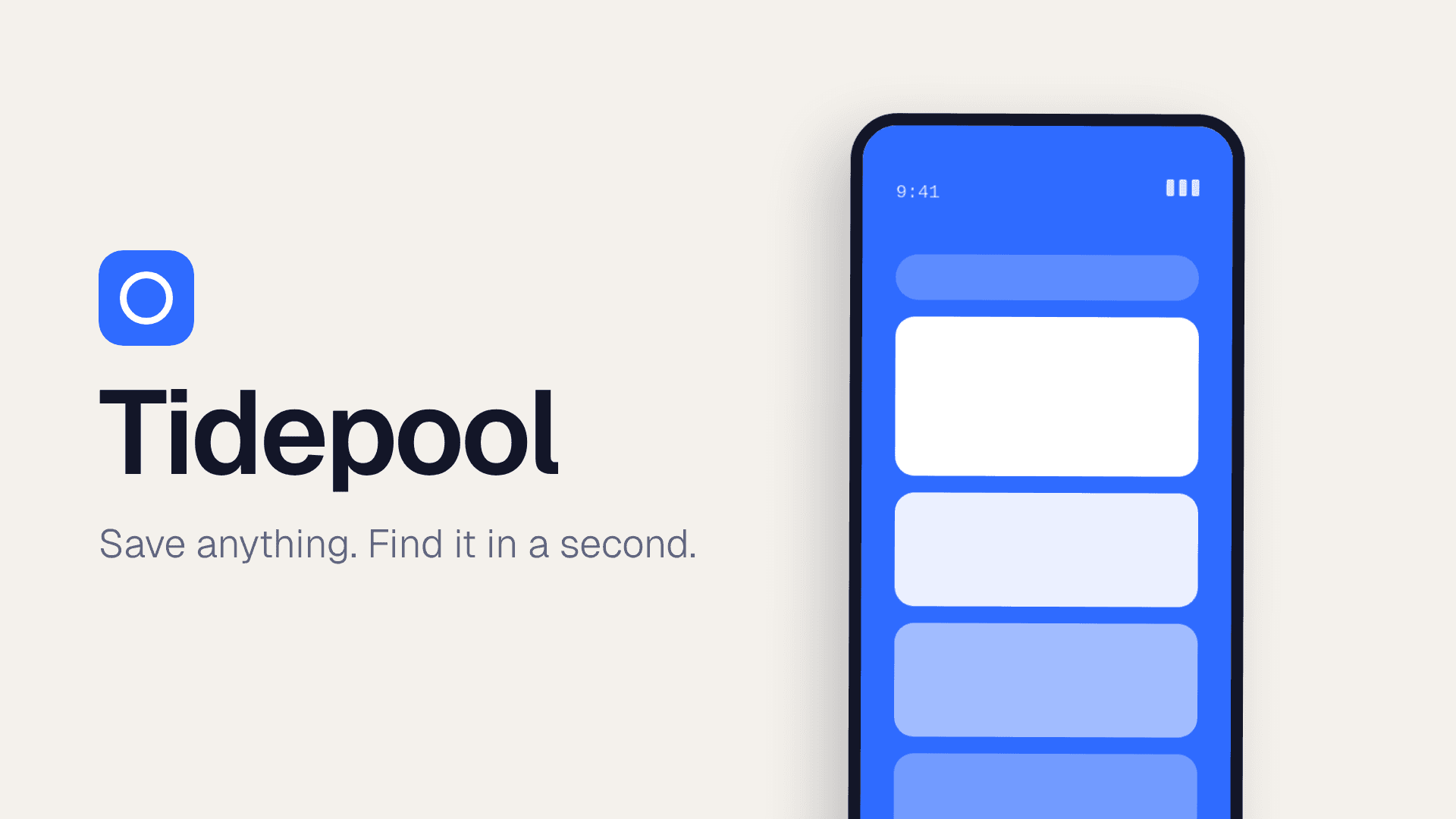
Product Hunt Launch - Mobile App
A 17.6-second 16:9 launch video for a mobile app, built to be filled in and rendered in one pass: five beats - lockup, three features, then the ask - over an alternating cream / navy / blue rhythm. Every screenshot sits in a phone frame that arrives tilted in 3D and rotates to flat as it lands, and the dark scenes wipe in and out rather than cutting. Eleven variables: logo, product_name, tagline, three portrait screenshots, three feature lines, launch_line and cta_line. It ships with self-contained placeholder art, so it renders complete with nothing uploaded and users replace the parts they have. screenshot_2 and _3 fall back to screenshot_1 if only one capture exists. launch_line is the only Product-Hunt-specific element - clear it and the same render works as a generic launch video for X, LinkedIn or a mailer. Feature lines read best under about 45 characters; longer copy wraps to three lines rather than clipping.
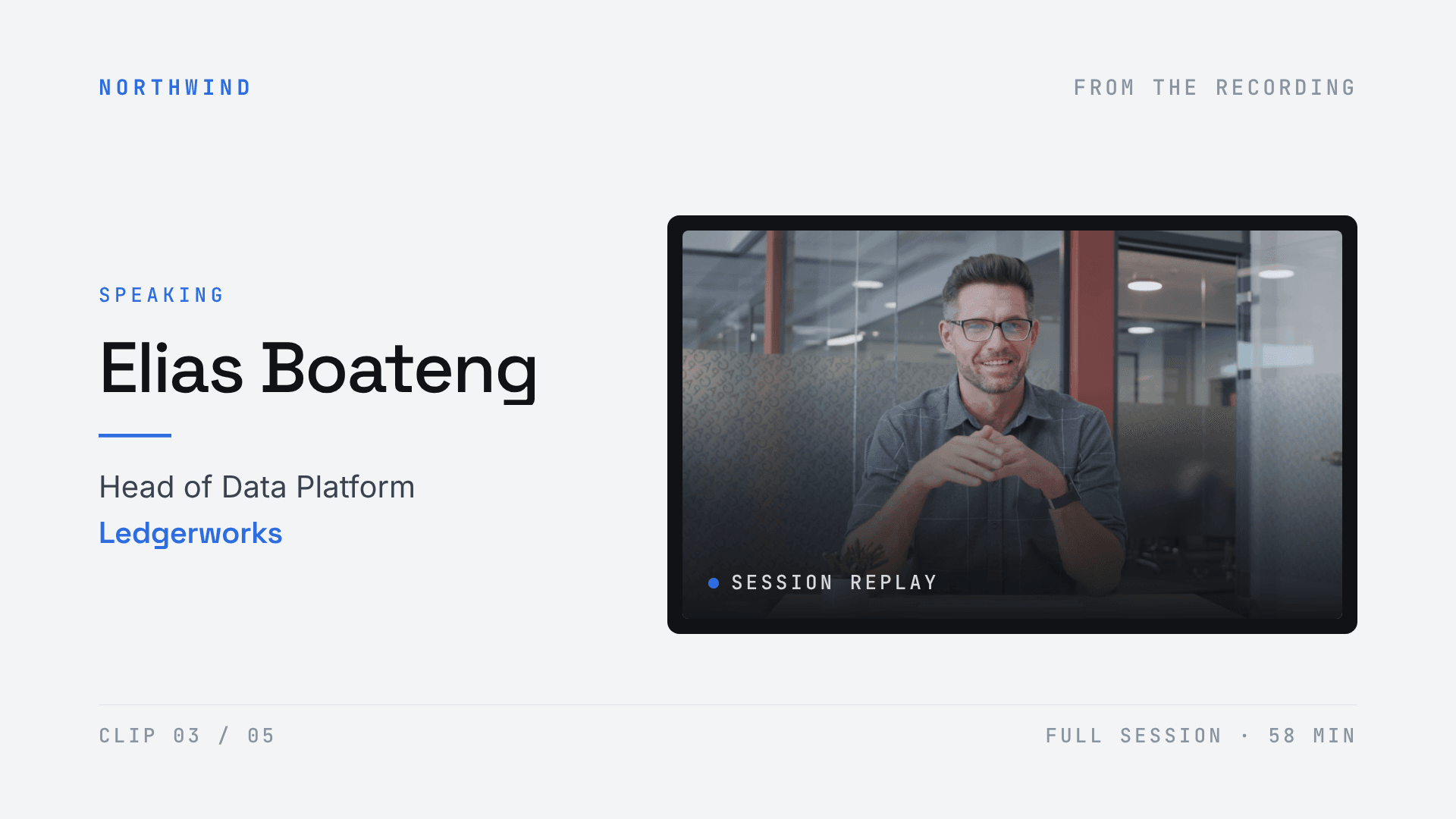
Webinar Replay Clip
A five-scene pull-quote clip cut from a recorded webinar, built so one session becomes five publishable posts: a producer marks five moments and sends five rows, each with the same recording trimmed to a different minute and a different quote. 1920x1080 16:9, 36 seconds at 30fps, alternating near-black and cool-white grounds with a single professional blue carrying every kicker, rule and progress slice. The footage is never trusted to carry a frame alone — it is blurred and scrimmed in the cold open, matted inside a hard bezel for the speaker card, letterboxed to 2.5:1 for the captioned moment, and absent entirely from the pull quote and the closing link. Thirteen dynamic fields swap per render: clip_footage (the trimmed recording, reused across three scenes with three different crops and grades), speaker_photo, speaker_name, speaker_role, speaker_company, speaker_credit, clip_topic, quote_text (set at 52px in the caption band and 88px in the shareable pull quote), session_title, session_line, session_url, clip_index and brand_name.